









BIEST
QUADRAT
The third square by BIEST. After INTENT and SQUAREWEAR, it asks the simplest question: what does the fabric do?
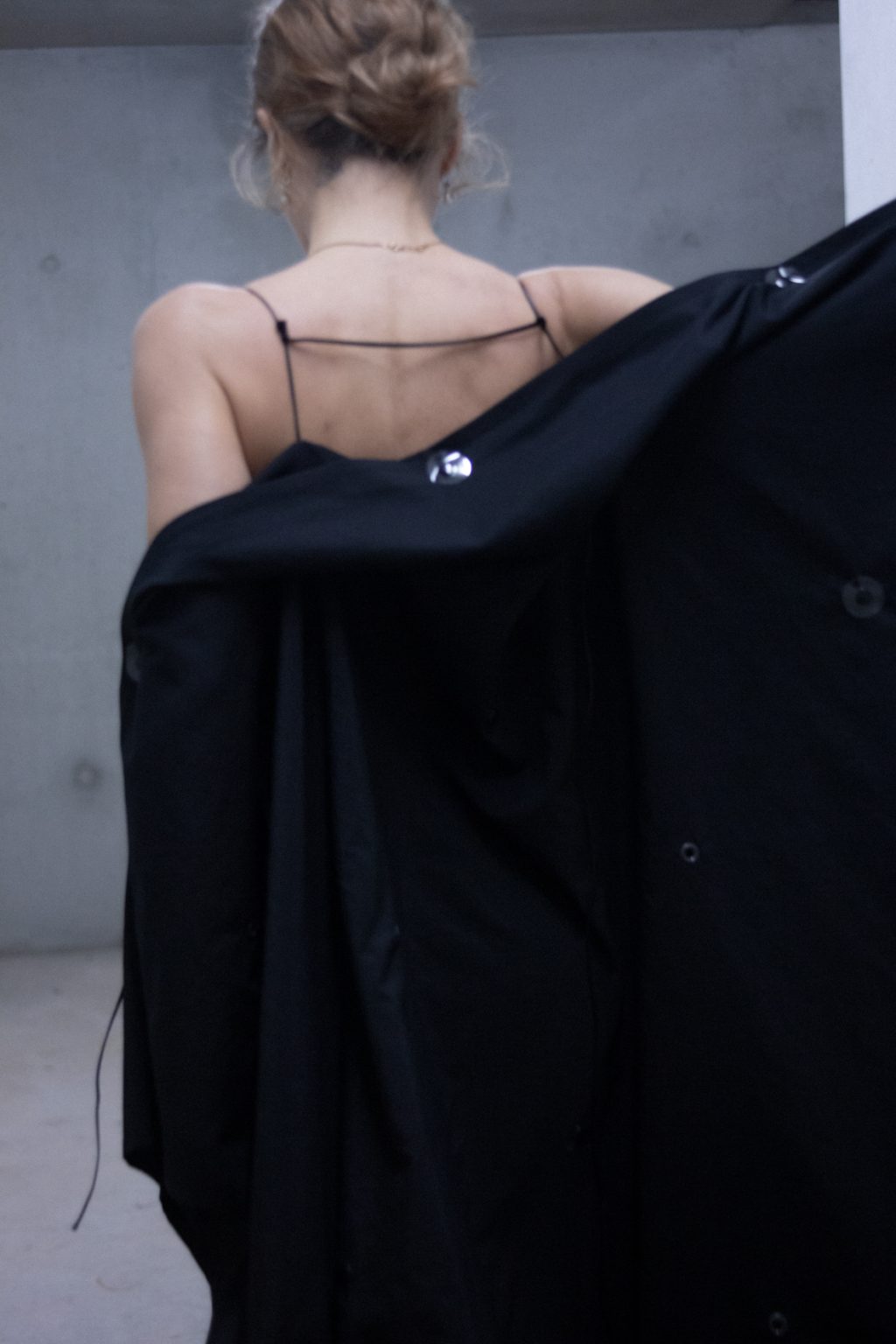
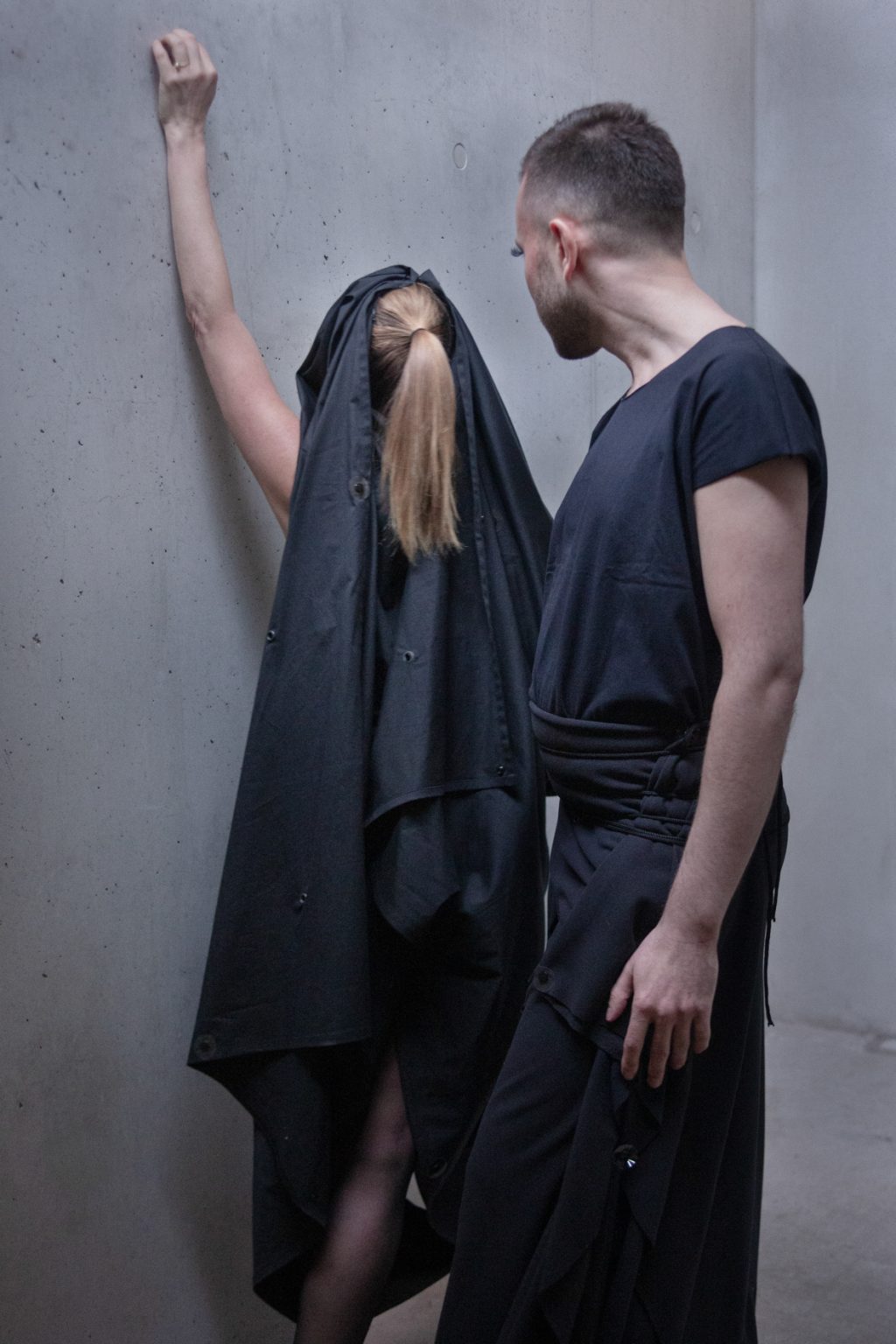
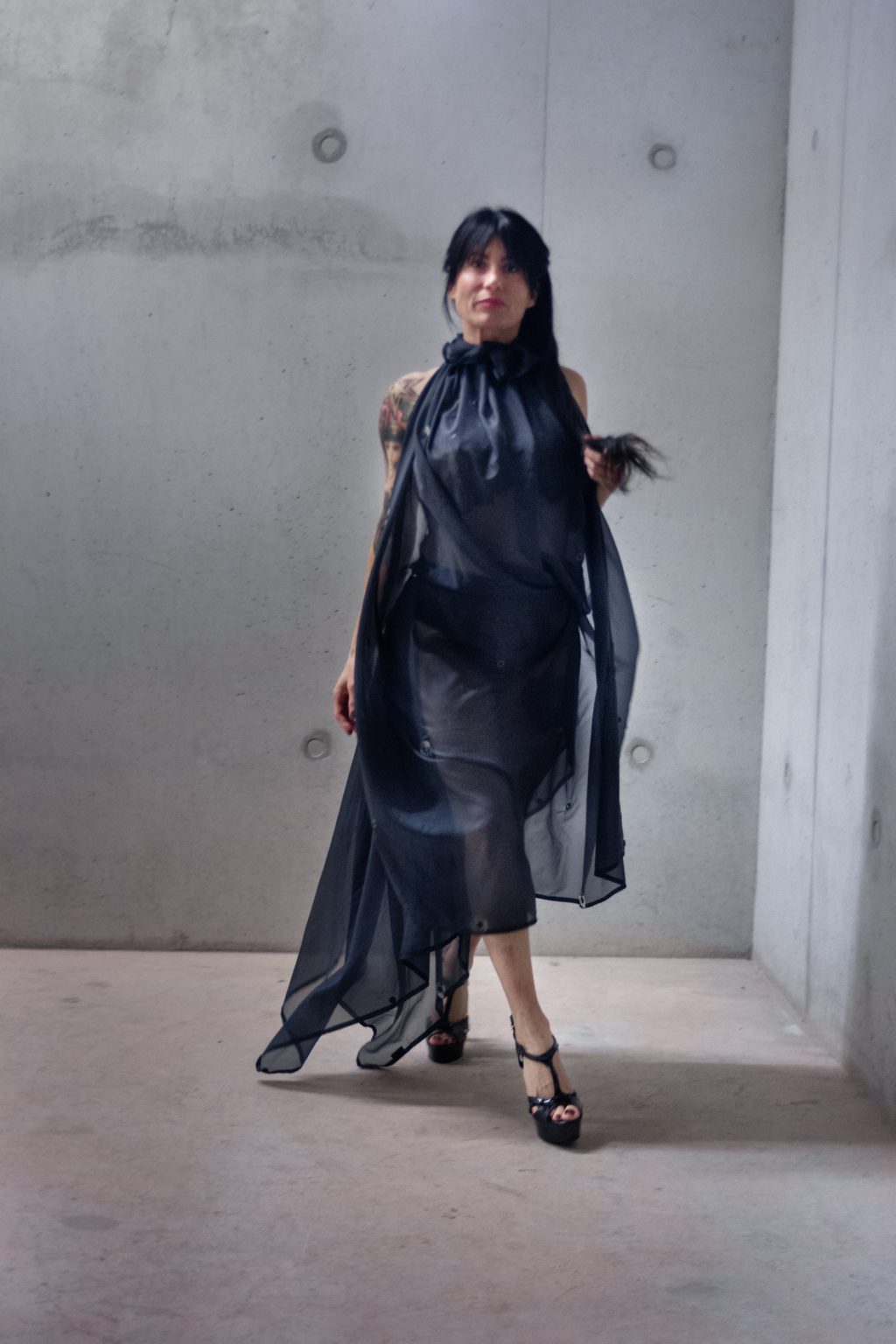
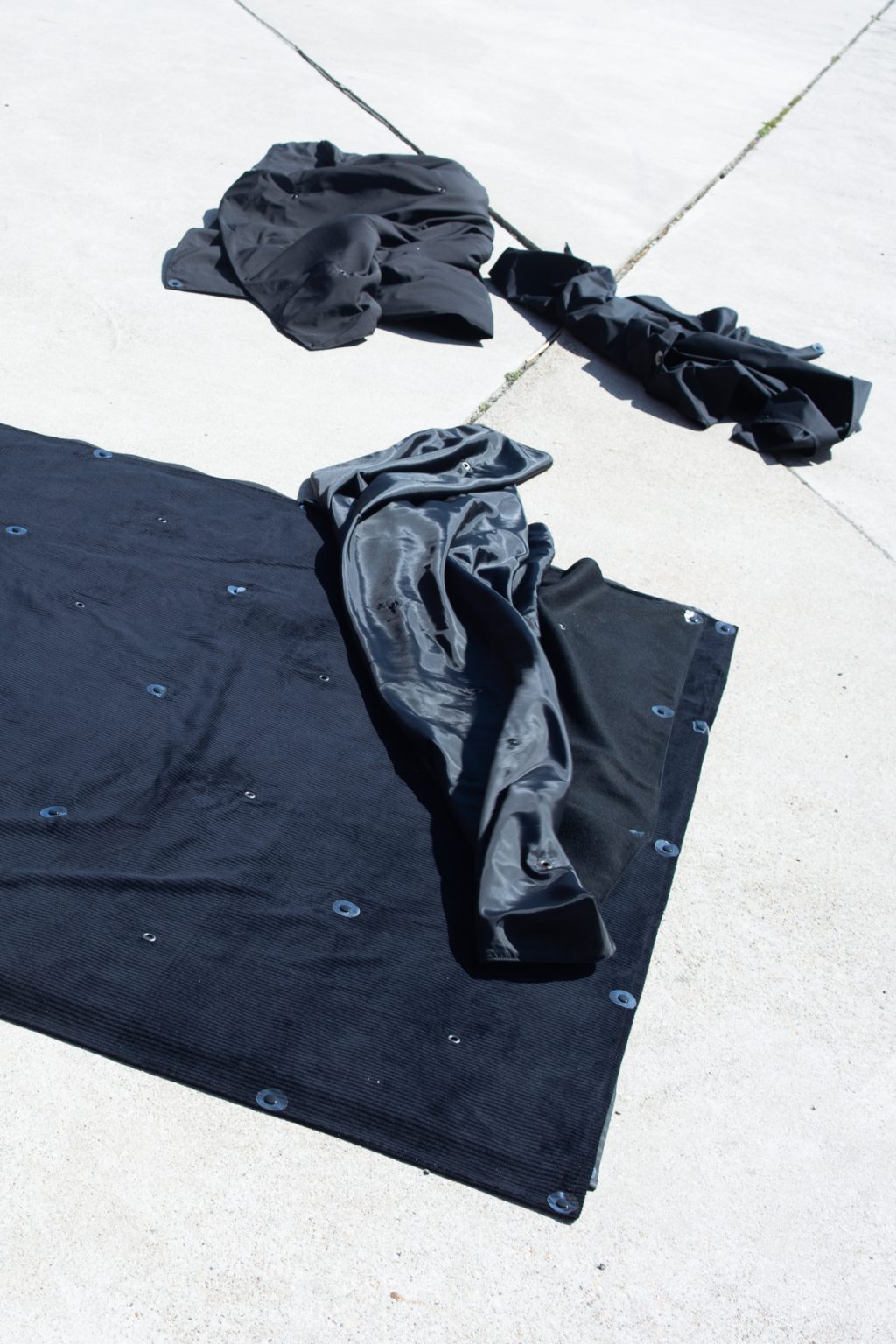
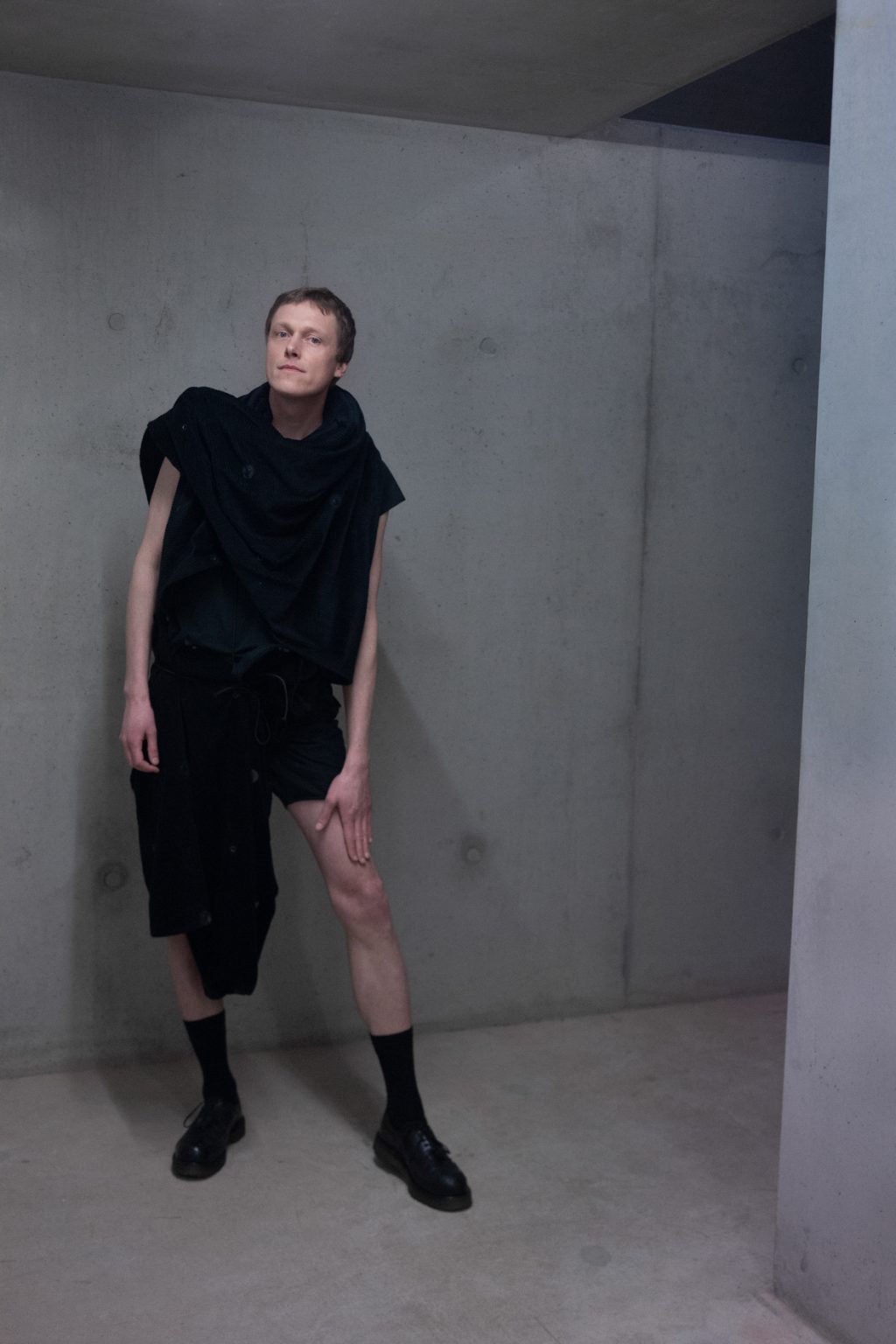
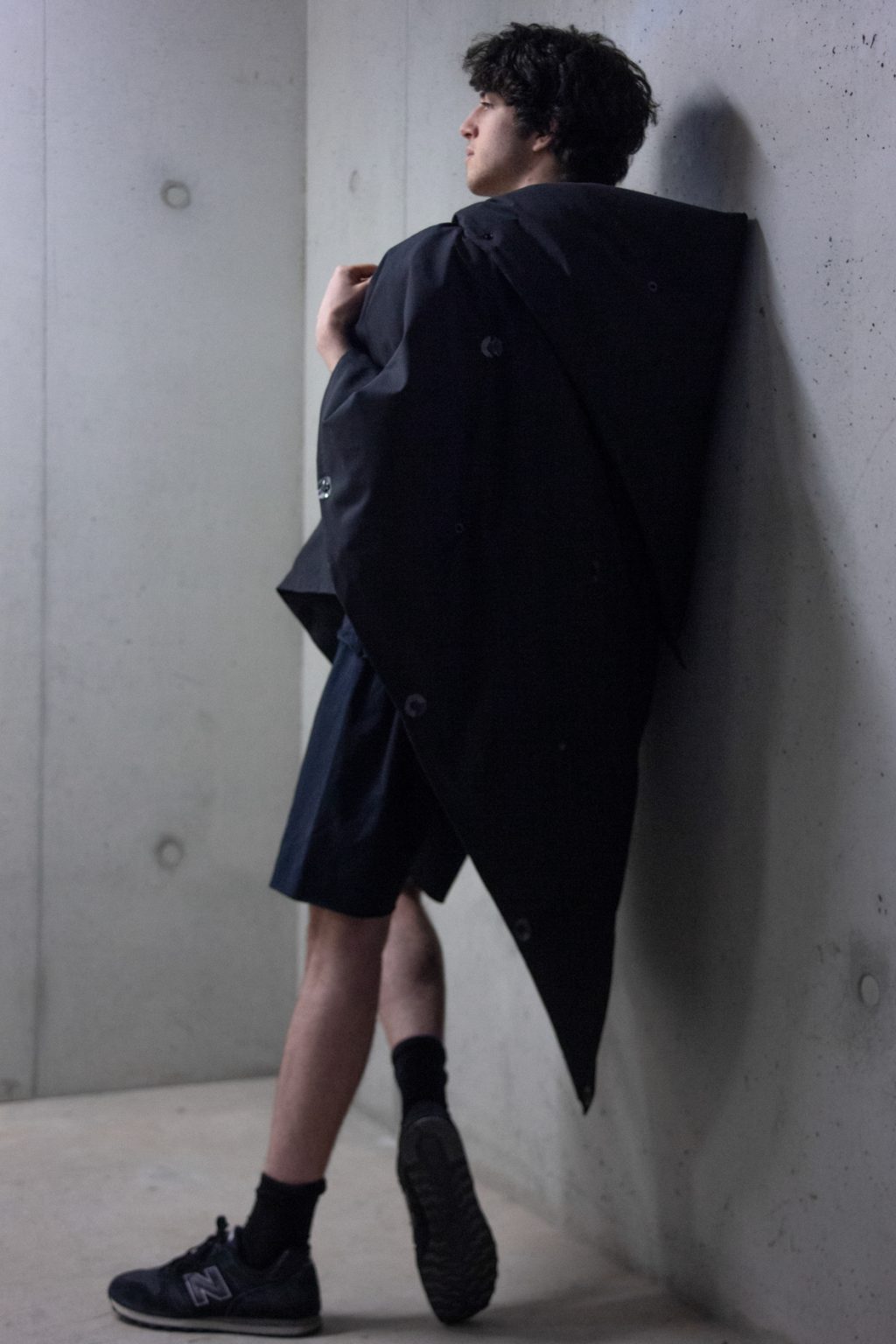
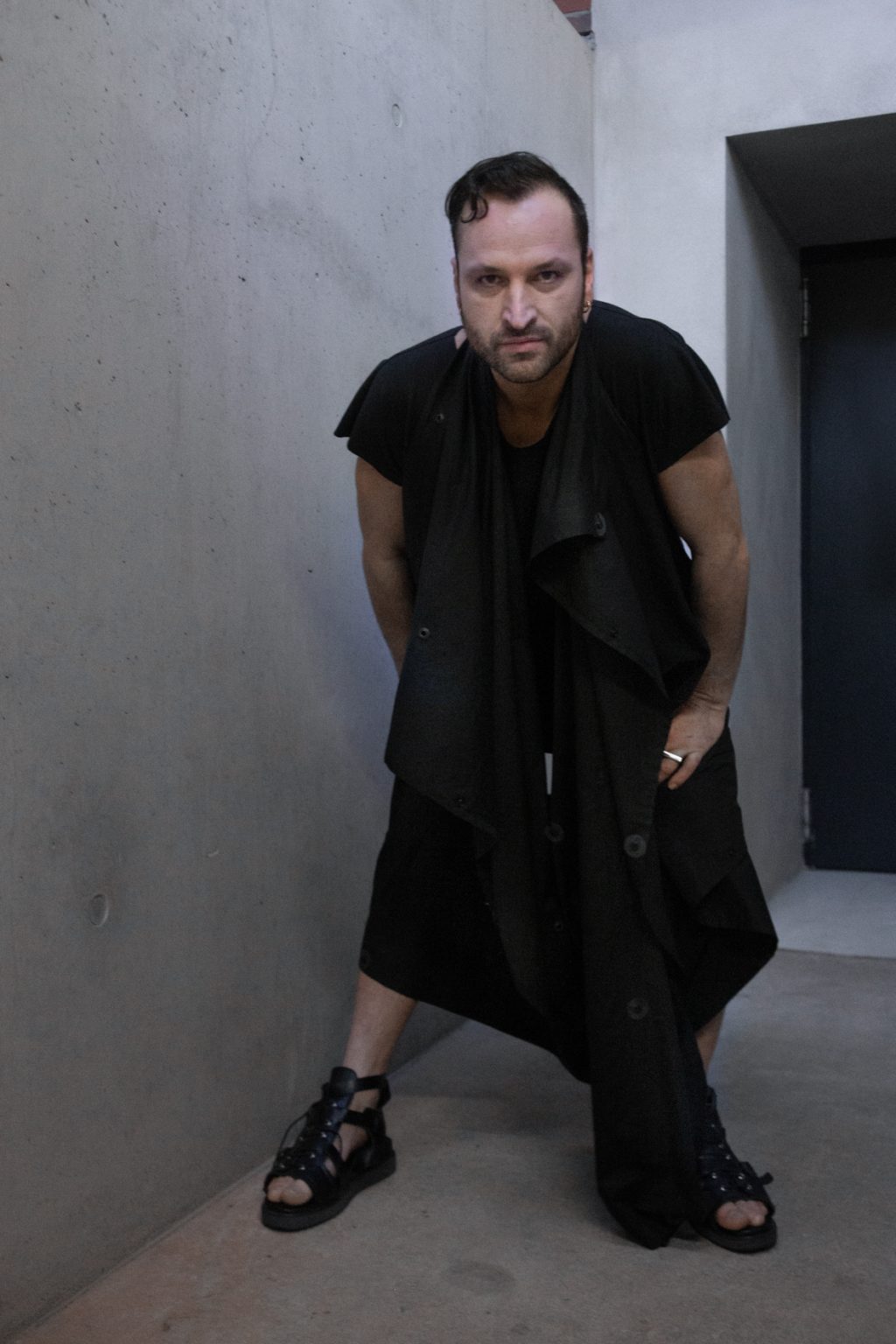
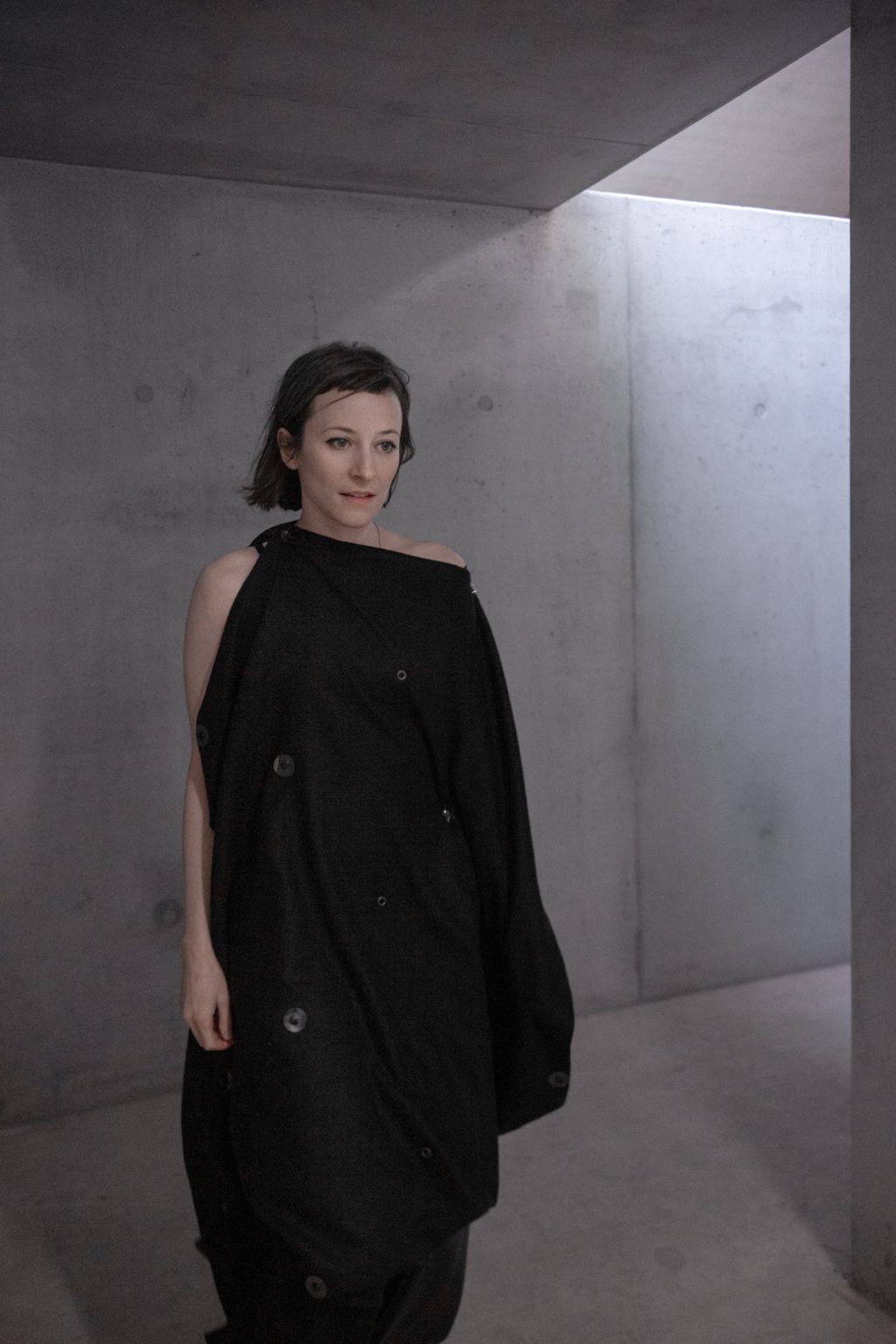
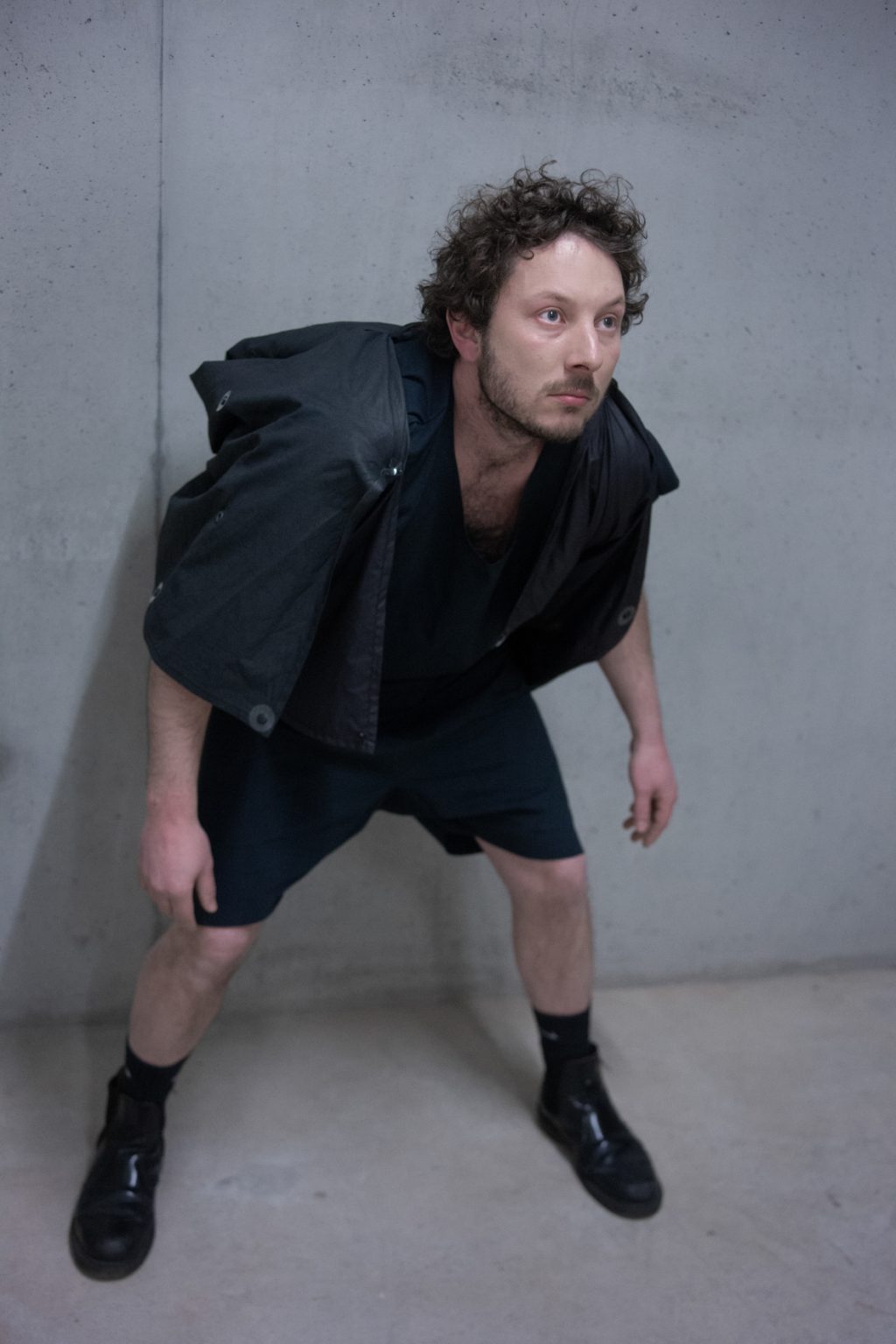
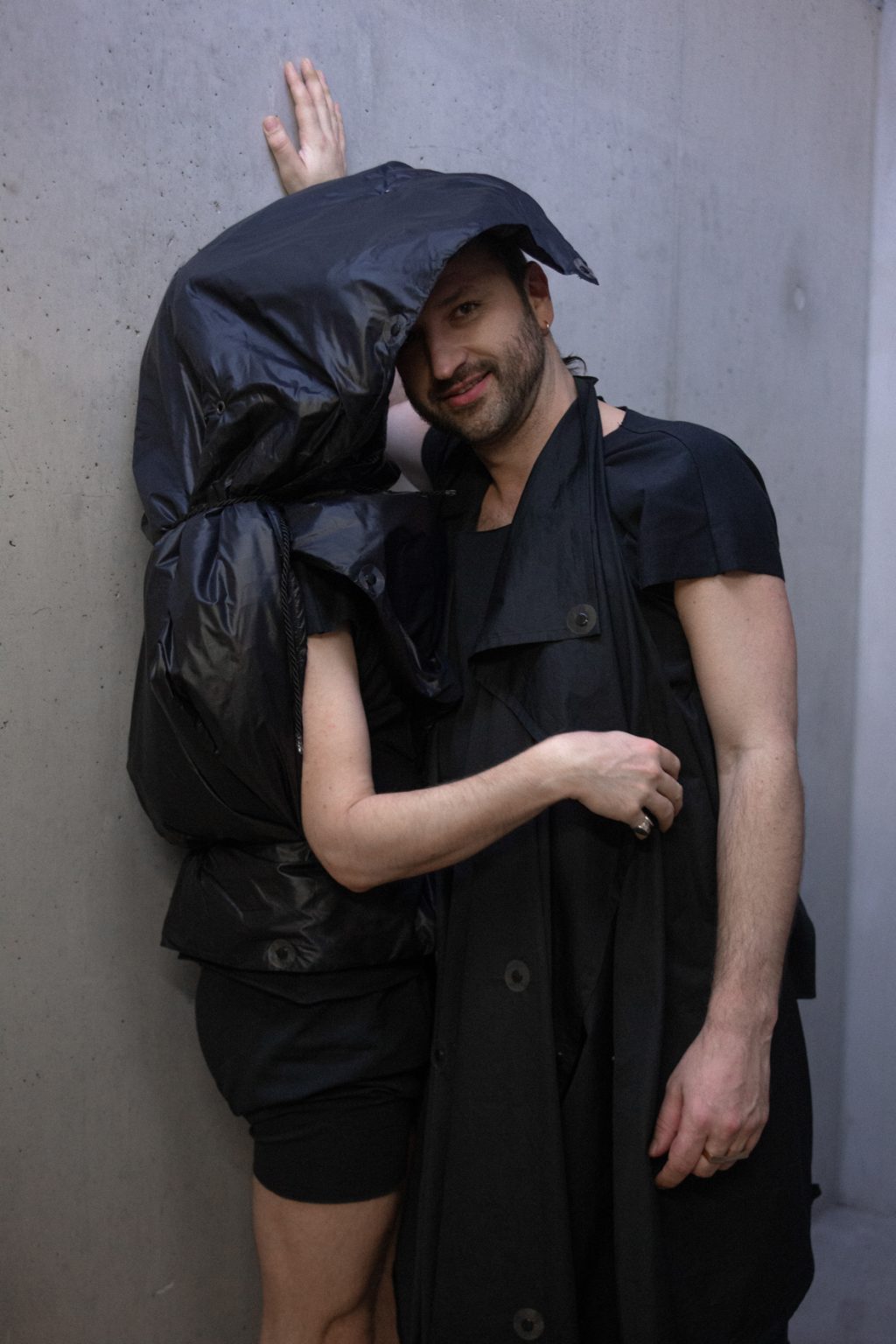
A square, 1.40 by 1.40 metres. On it, a grid of press studs, upper and lower parts alternating, and offset from them, rows of eyelets. The studs close the fabric; ribbons drawn through the eyelets gather and tie it. A single square can already close itself into a form; a second one opens up more. Laid out flat, it is a surface, a zero. Only on the body does it become something: hood, dress, coat, veil.
Everything is black. The only difference is the fabric, from stiff to sheer. Same size, same grid, and yet the waxed cotton stands like a sculpture while the chiffon falls and lets the body show through. The stiffer the material, the more architecture; the softer, the more body.
Malevich’s Black Square, too, was never the pure sign it is often taken for: painted askew, cracked, with other pictures underneath. The material has its say. And before it hung on a wall, it stood on a stage: in 1913, in the Futurist opera “Victory over the Sun”, with a libretto by Alexei Kruchenykh, a prologue by Velimir Khlebnikov and music by Mikhail Matyushin. Malevich designed the sets and costumes, and the black square first appeared in his design for a curtain. BIEST brings it from the curtain back to the body, and back onto the stage.
The Quadrat was created for a fashion show at KINDL Centre for Contemporary Art, Berlin, in 2020. On the runway, each person wore only one fabric. Beyond it, the fabrics may mix: corduroy with denim, satin with velvet. The Quadrat is more open than the evening it was made for.
Foto: Fanny Harlan
Styling: Pauline Czerwinka
Make Up: Amelie Goldstaub
Video: Antje Engelmann
Soundcollage: Daniel Matz


