



BIEST
URHÜLLE
in collaboration with Kaimon Thürk
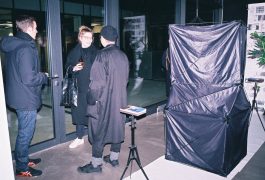
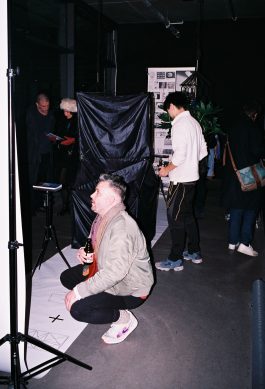
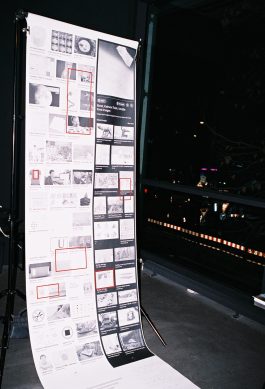
Exhibition: STUDIOLO, Berlin, 2019
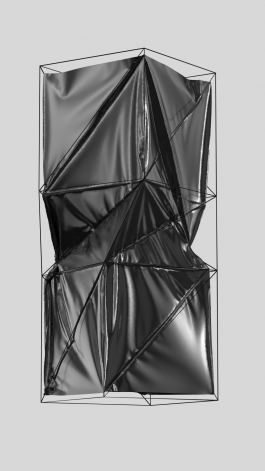
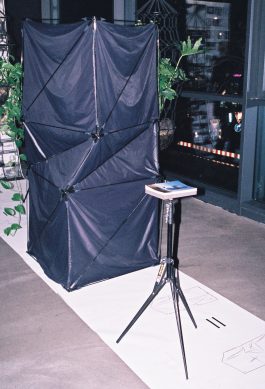
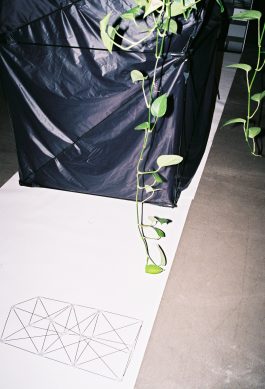
Some architectures do not emerge through the addition of material, but through a single gesture: the unfolding of a surface into space. A folded sheet, a stretched membrane, a shell that opens from a compact state.
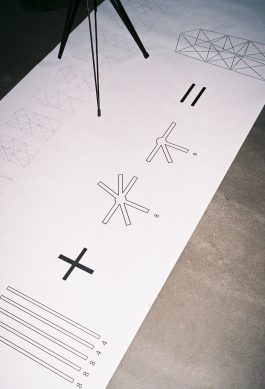
Based on research into origami techniques and technical folding structures—such as satellites that expand in orbit from small packages into large surfaces—URHÜLLE explores architecture as a process of transformation. At its core lies the question of the minimal gesture of dwelling: when does a shell become architecture?
The project understands architecture not as a permanent object but as a temporary spatial condition between body, material, and environment. URHÜLLE therefore proposes an architecture that is less constructed than unfolded—a reversible form that can always return to its origin.
“In the beginning, there was a horde of monkeys; in the end, there was Weltgeist incarnate. But what form might allow us to bridge such a time gap? The year was 1967 when Stanley Kubrick posed this perplexing question. The English director was hard at work on 2001: A Space Odyssey, the first legitimate science fiction movie and ultimately his masterpiece. One key part in the script proved itself to be almost uncastable: the role of extraterrestrial intelligence. The strange entity was to be tasked first with initiating the humanization of the apes and then, millions of years later, proceeding to guide the human species beyond the realm of its own limits. And thus Kubrick asked: What might constitute a form able to self-evidently embody the highest level of intelligence? In what material might such a teacher of consciousness clad itself? A consciousness, lest it be forgotten, representative of the entire universe as a development program. Something able to symbolically sum up the process of becoming intelligent as the principle of humanity—in anticipation of its fulfillment. What might that look like? Kubrick came to the conclusion that the pinnacle of mental performance must lie in successful simplification. […]”
Wolfgang Pauser, Form und Freiheit
Photo: Palma Llopis
kind support by 植木富美子, Nadja Haas, Daniel Matz


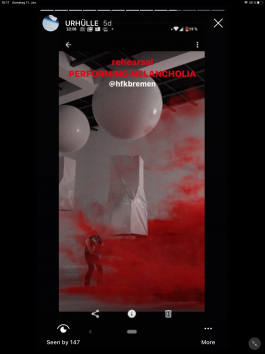

Lecture and Workshop PERFORMING MELANCHOLIA University of the Arts Bremen 2020